
20th cent.
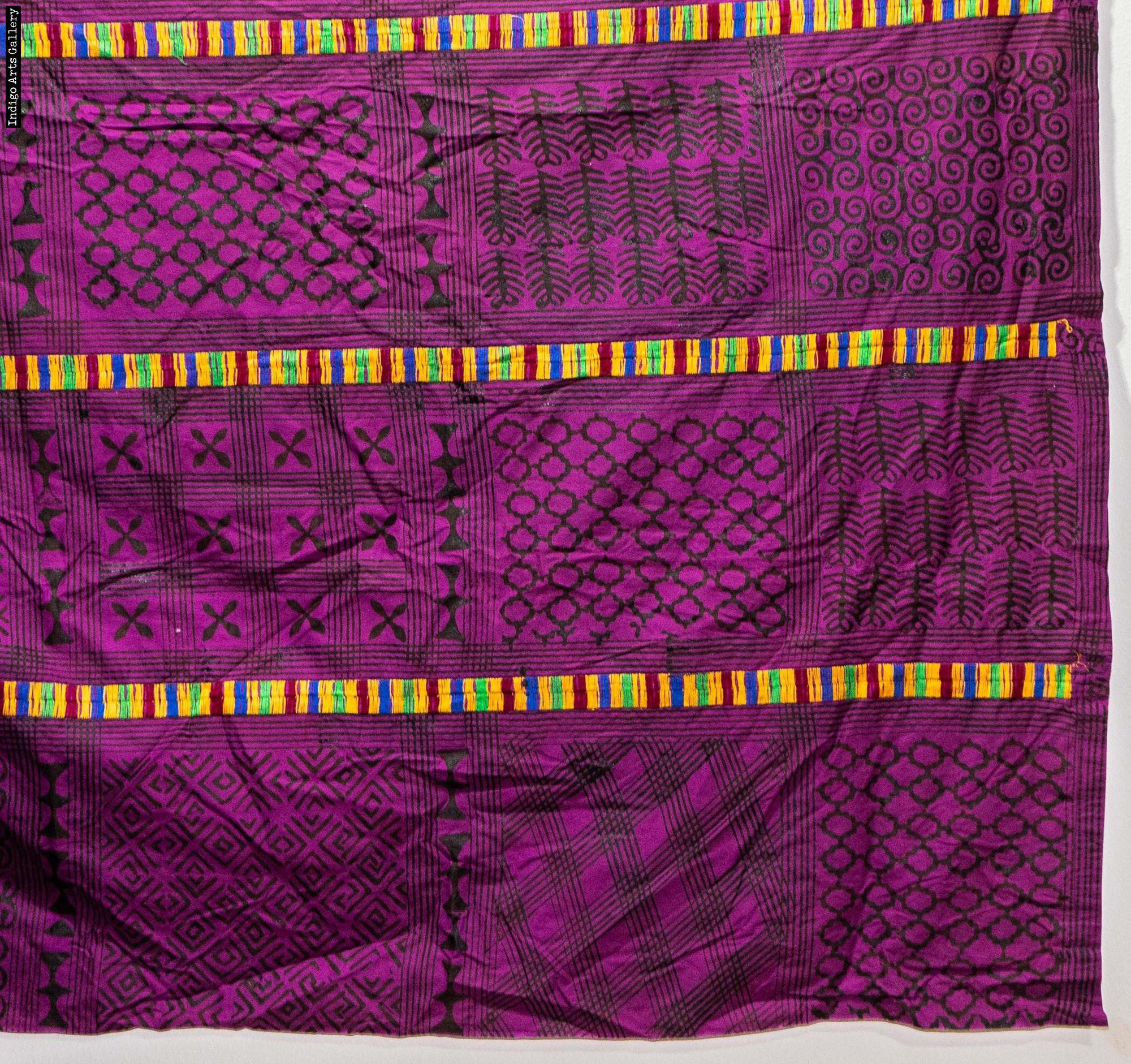
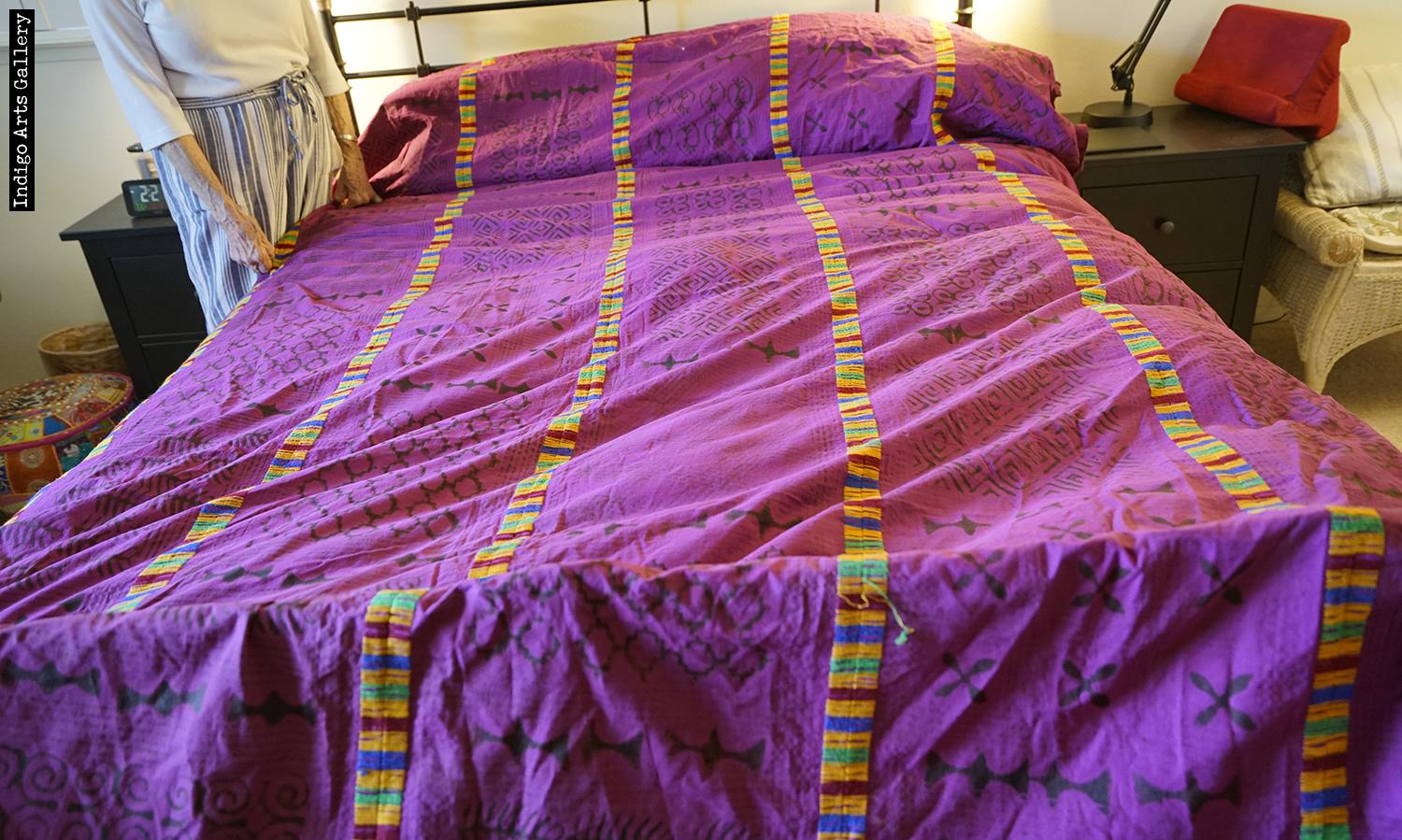
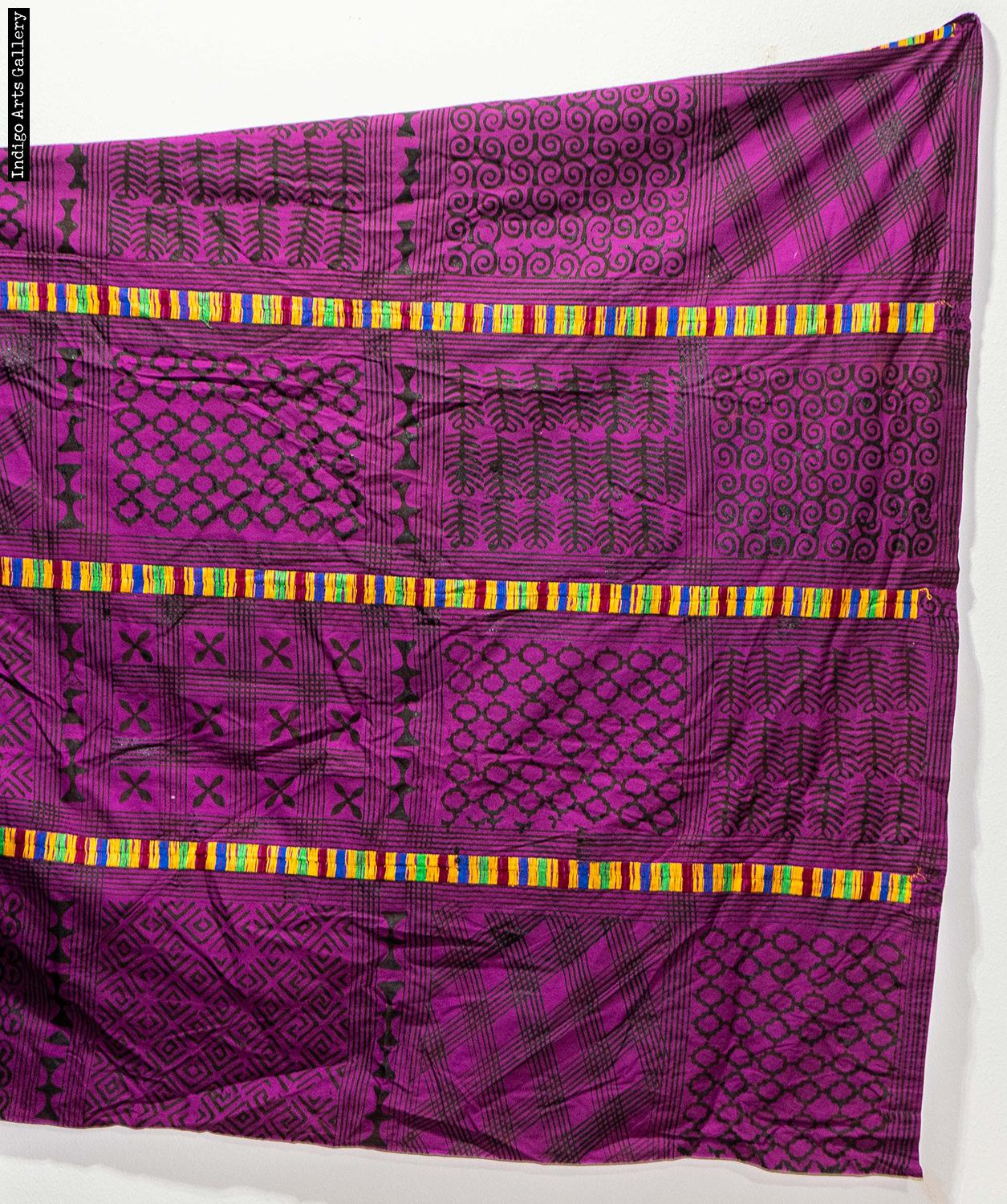
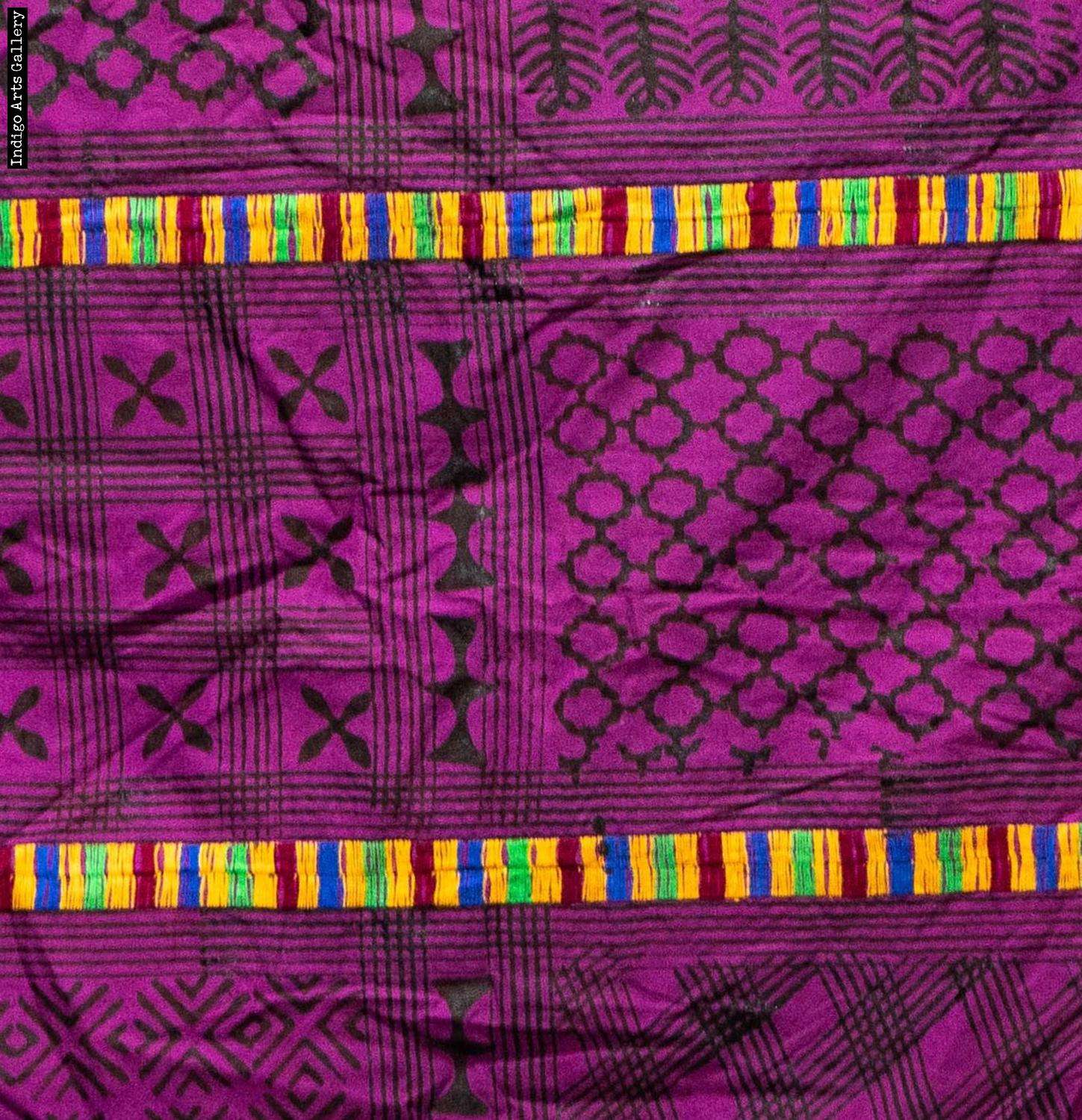
Adinkra-stamped cotton cloth (black on purple cloth) strips joined by hand stitched multicolored cotton bands.
(partial view of piece shown)
(137" l. x 84"w.)
From private collection, purchased at the University of Ghana, Accra, Ghana.1972.
The Asante peoples of Ghana use adinkra to express the connection between the verbal and the visual in Akan culture. Adinkra symbols appear on wooden prestige objects, jewelry, brass weights and, most prominently, as two-dimensional stamped designs ornamenting cloth. Historically, adinkra was reserved for Asante kings. Over the years, however, its use has expanded to the general Akan population who wear adinkra cloth on significant occasions, the most important of which are funerals.
Of the hundreds of adinkra signs and meanings that have been documented, the older symbols are most often linked to proverbs, folktales, folksongs and popular sayings. Newer designs are associated with more common themes, such as flora, fauna and everyday objects, or may demonstrate literacy of the alphabet through designs composed of letters in Roman script that spell out personal names or segments of proverbial expressions. Mastering the nuances of this graphic form of communication is usually only accomplished by well-trained artists and elders who, through study, are able to identify the names of many adinkra symbols, the proverbs associated with them and the situations best addressed through particular symbols.
(above notes from Smithsonian Museum of African Art)
$395