
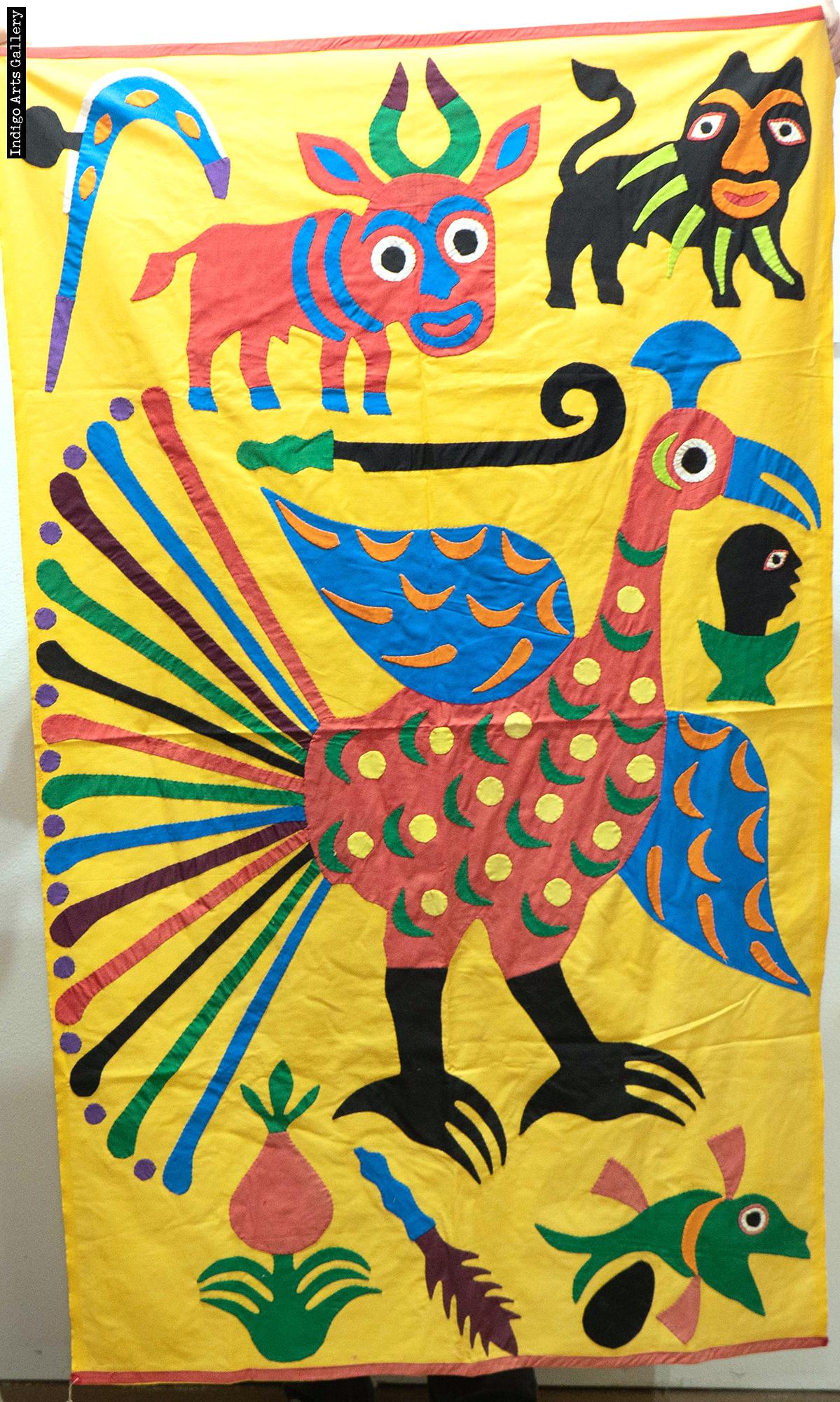
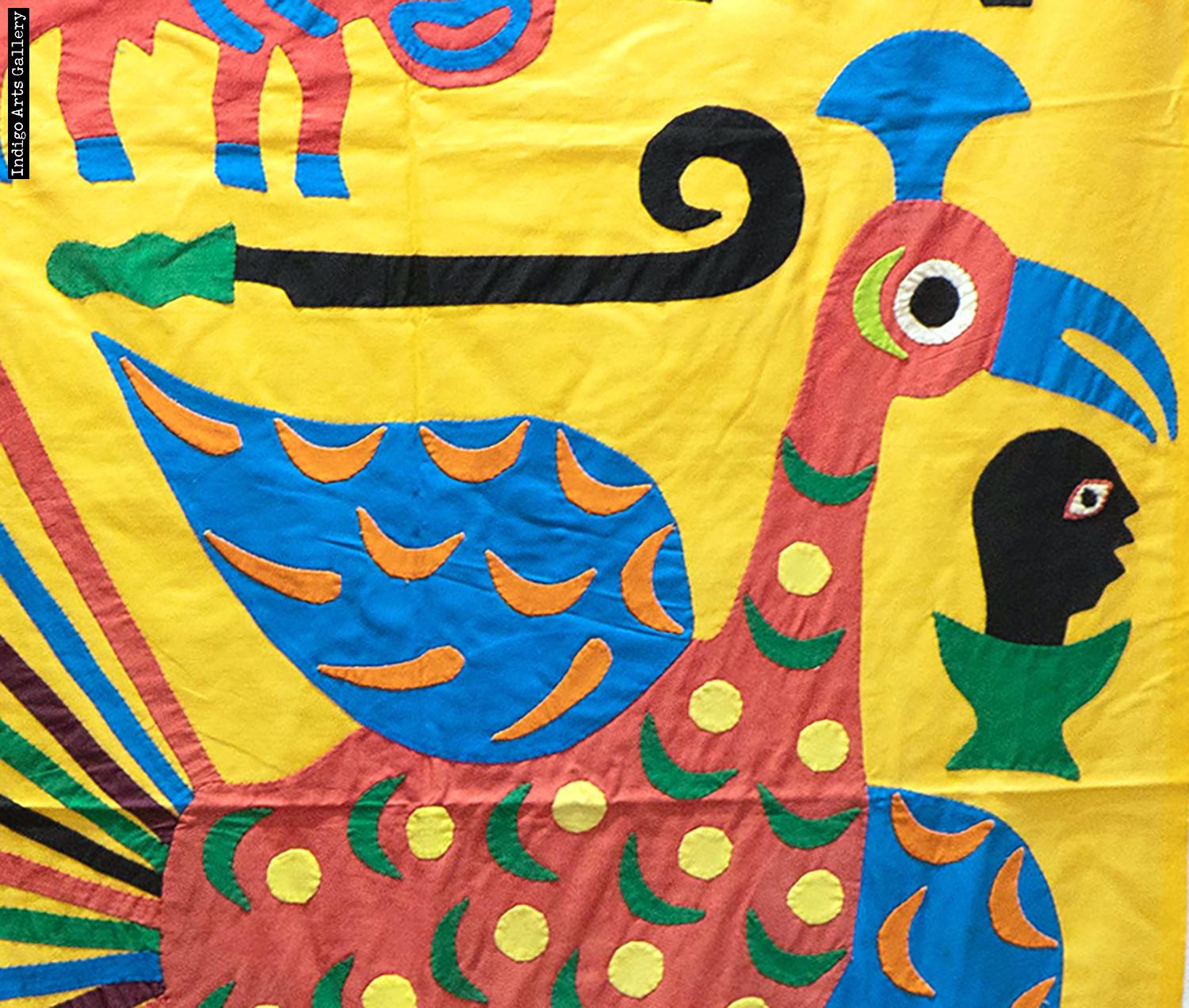
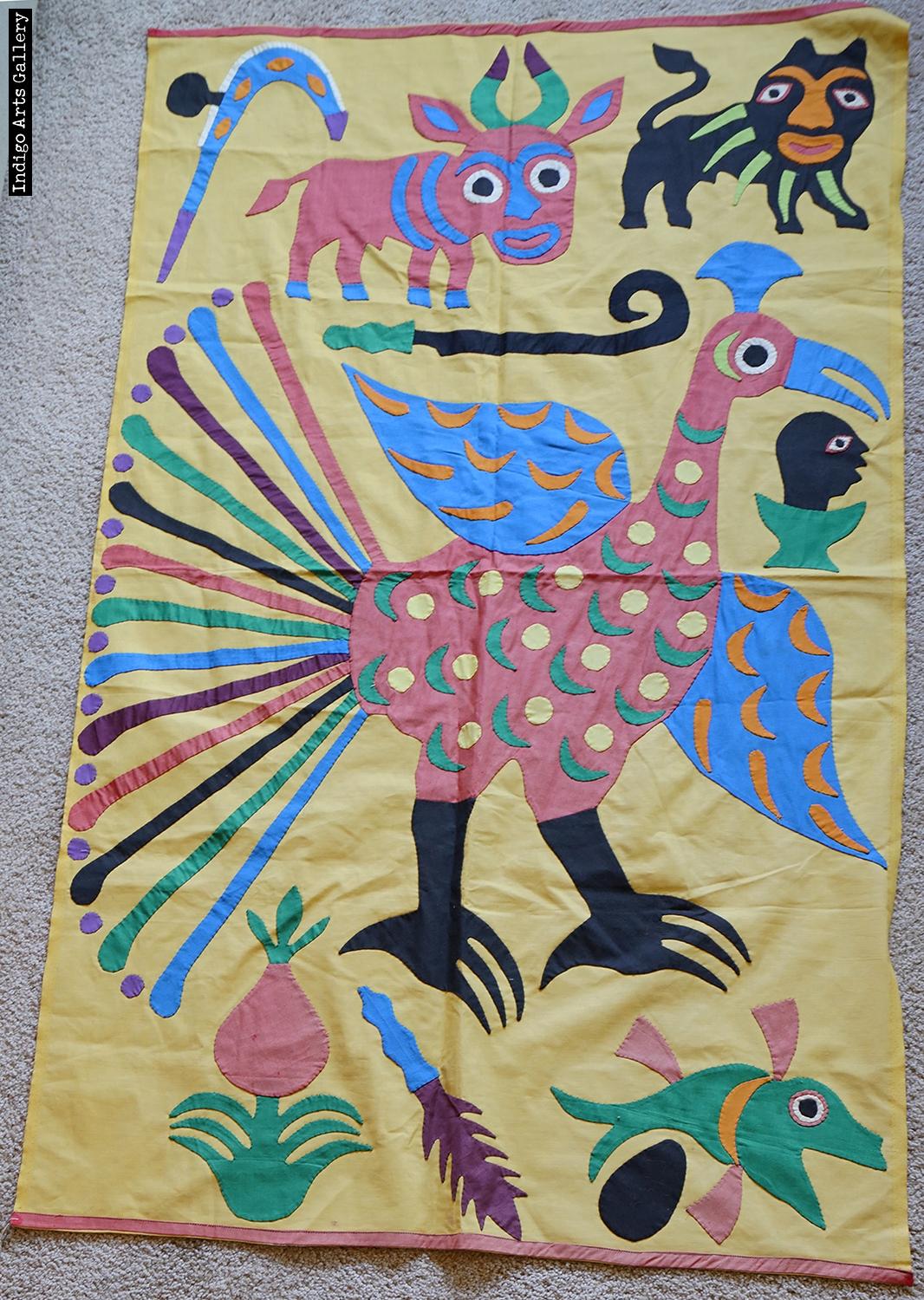
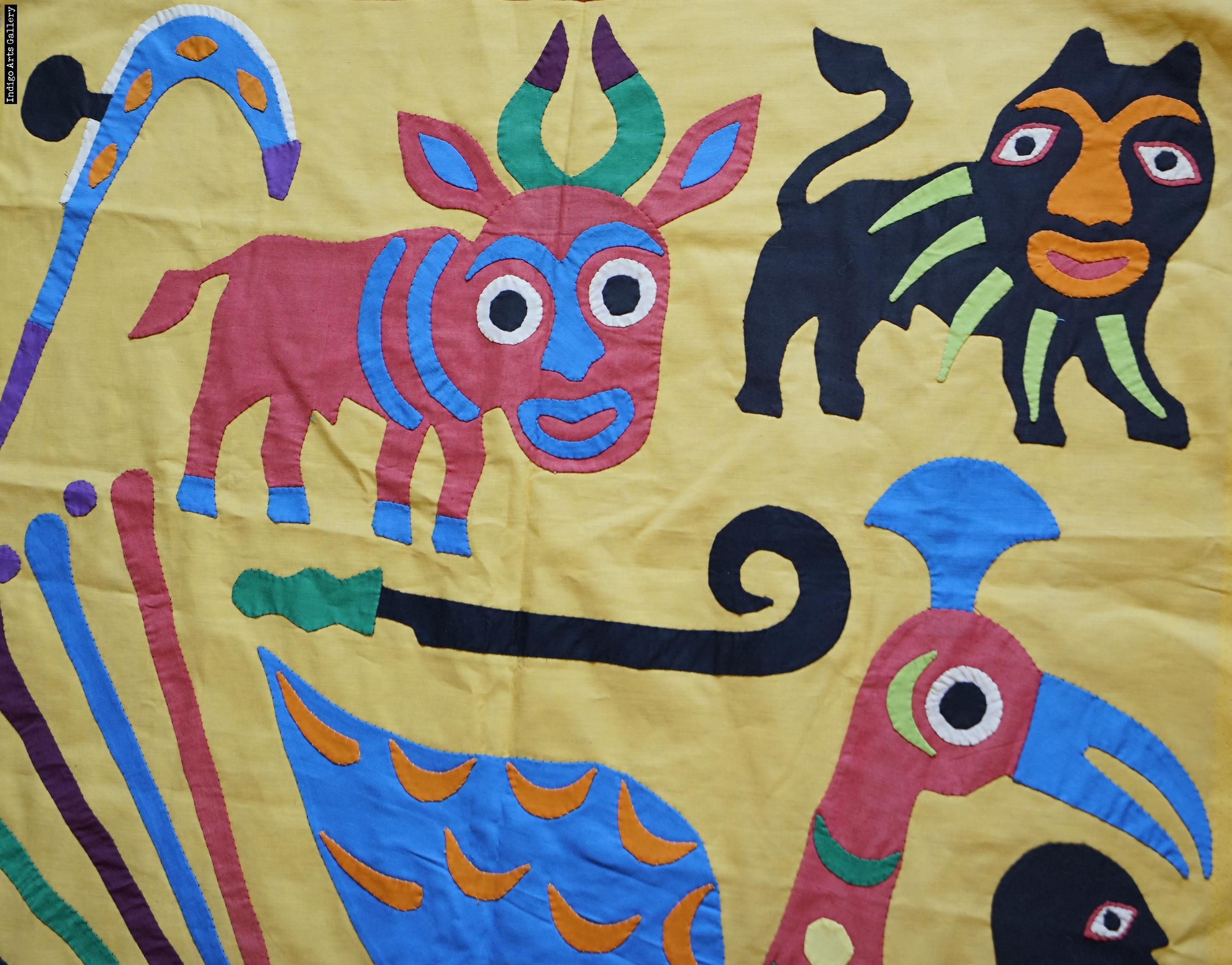
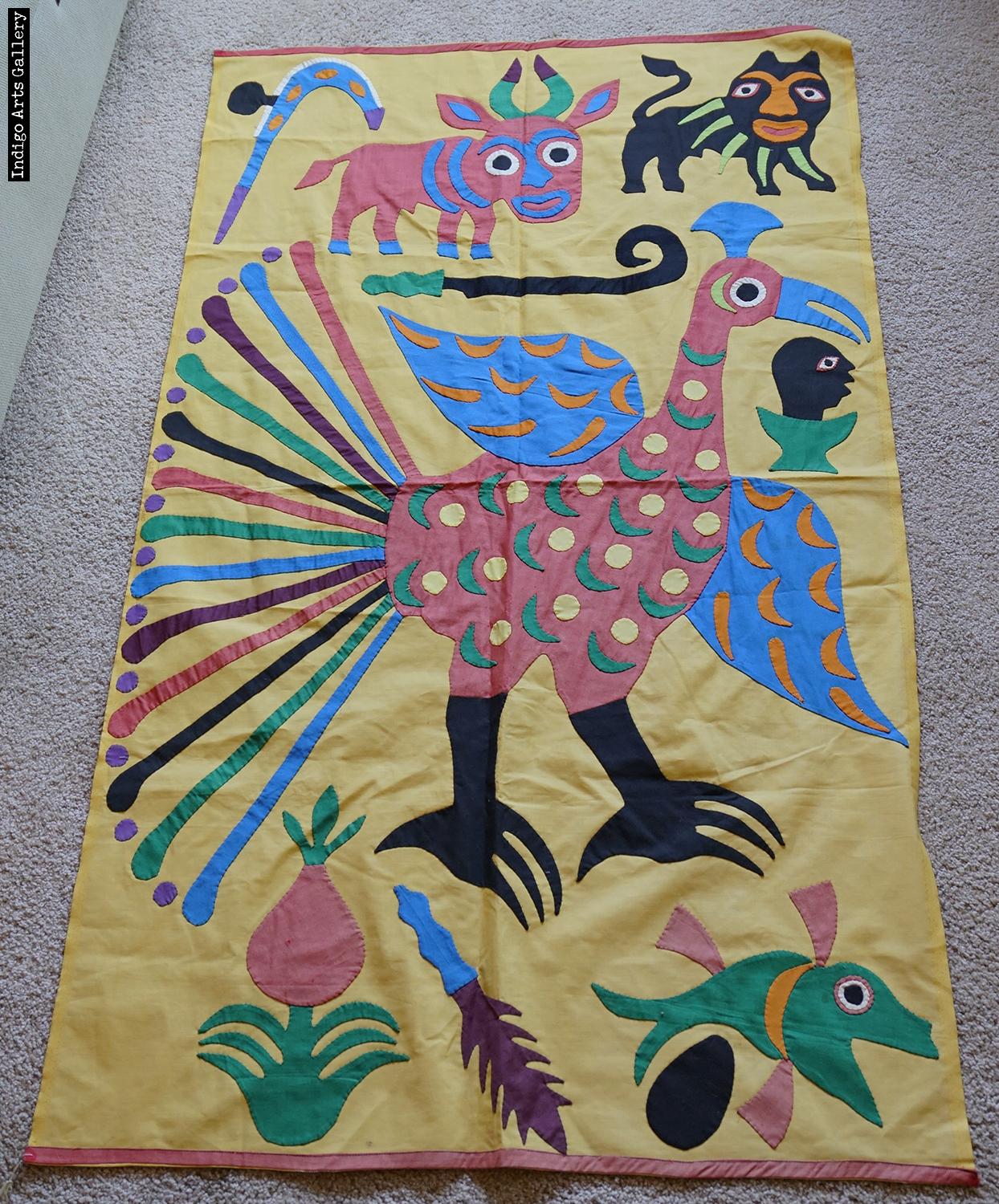
Unknown Fon textile artist. Dahomey (now Benin), c.1970. (53"h. x 34"w.).
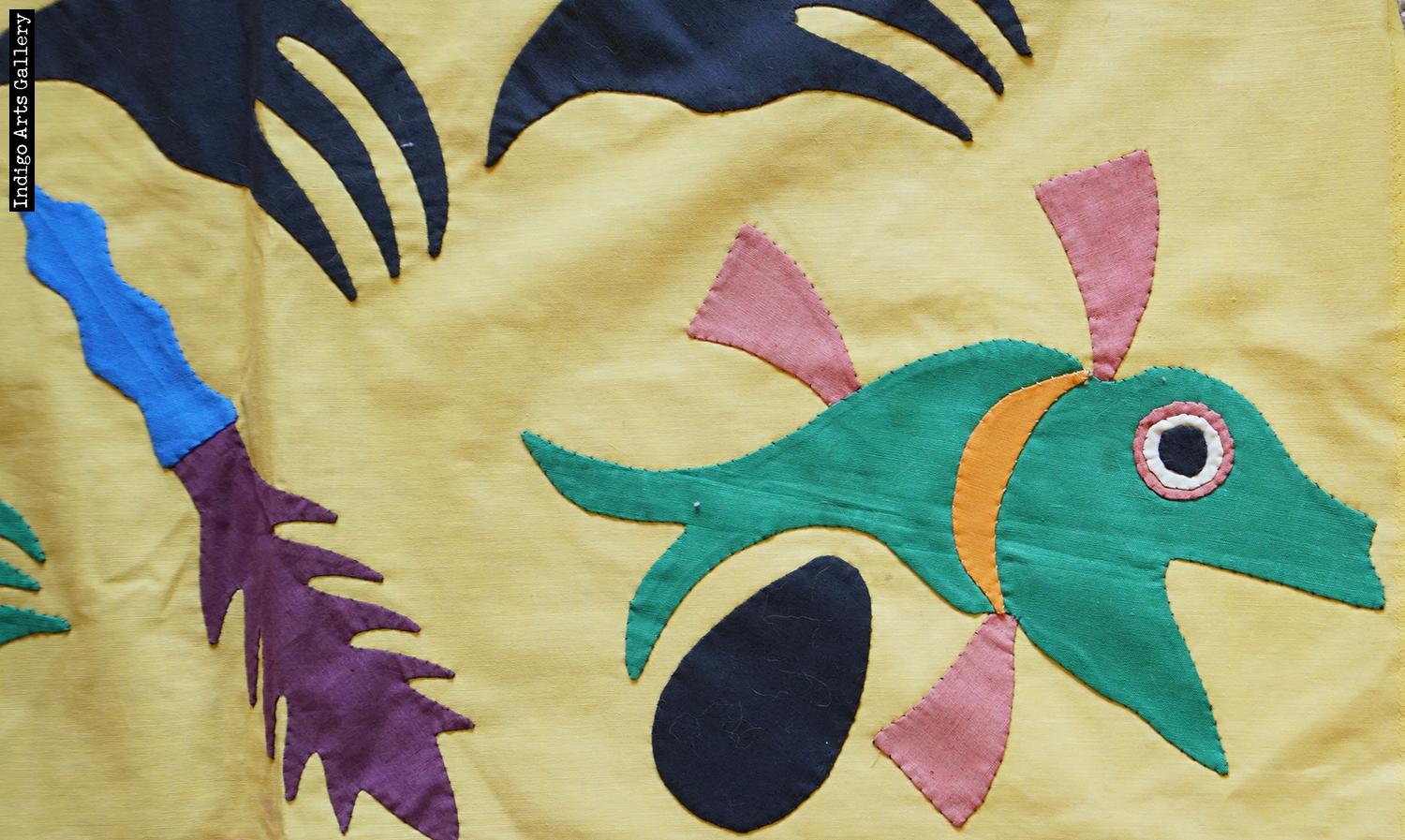
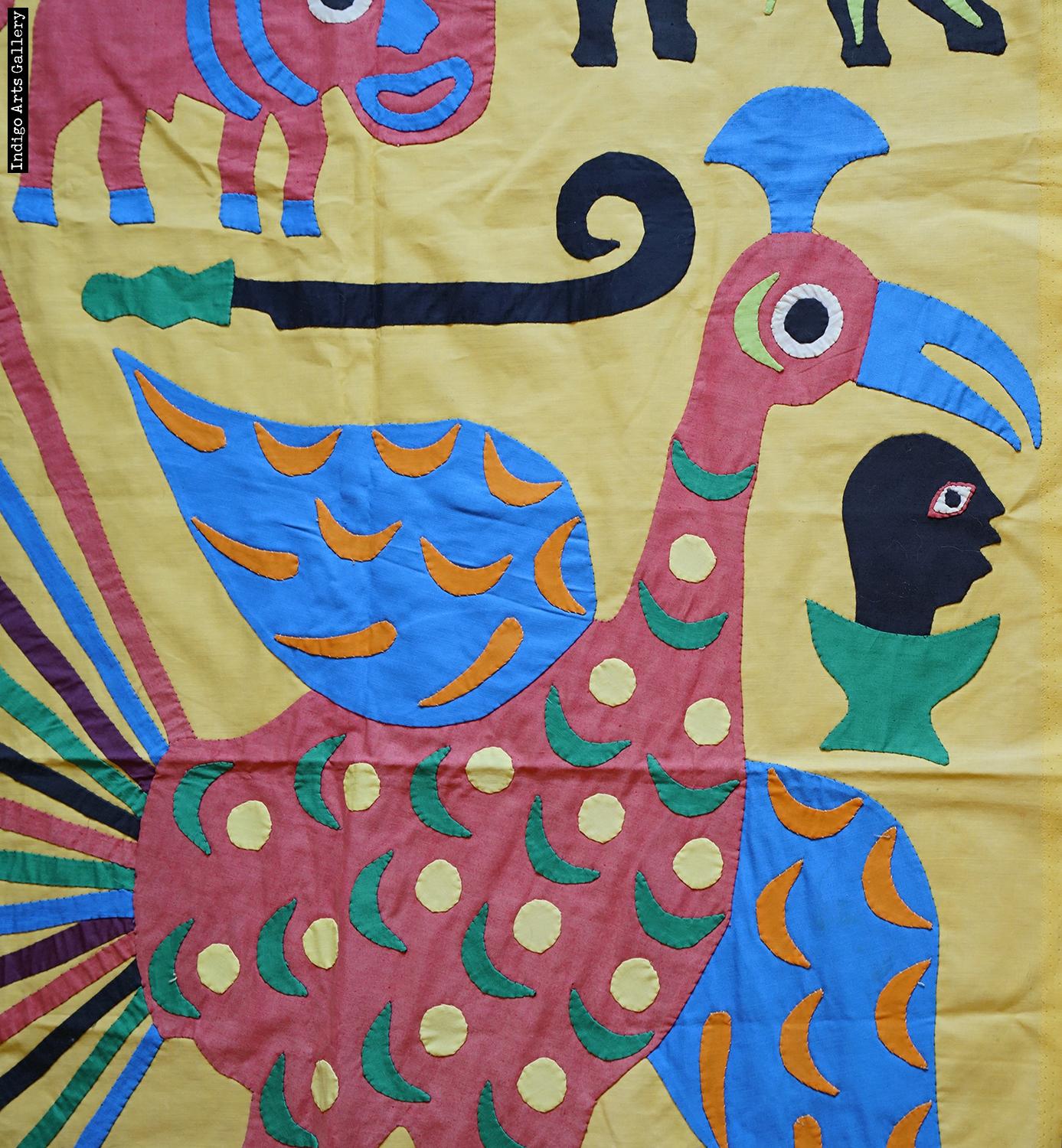
Appliqué depicting peacock, buffalo, lion, fish, human head and other traditional symbols of Fon royal history and myth.
Provenance: current owner purchased in Benin (known as Dahomey until 1975) in 1973.
In the ancient West African kingdom of Dahomey, appliqué cloths were made on commission by members of family guilds for individuals of high rank and power. The appliqué designs depicting birds, fish, wild animals (lion, bush cow), human beings, plants (trees, pineapple), sailing ships, king's insignia and the like recalled particular events during the reign of the kings of Dahomey and were linked with well-known proverbs to convey stories of power, conquest and status. Many of the designs seem linked with bas-relief patterns on palace walls. Certain designs referred to the praise names of local rulers and the arrangements of figures suggested, at times, progression in the actions of daily life, a familiar story or a specific incident.
Traditionally, men were the producers of appliqué, working with European trade cloth to create state umbrellas, rulers' hats, association banners and hammocks, pillow tops and wall hangings to decorate the houses of chiefs and others of high status. More recently, wall hangings, in particular, have become popular tourist items, fueling the production of new appliqué cloths to meet market demand.
(Notes above from the Smithsonian National Museum of African Art)
$450